

PPSC lecturer jobs are among the most sought‑after government teaching posts in Punjab. For many graduates and postgraduates, teaching in a government college under the Higher Education Department is the ideal combination of respect, job security and work–life balance. That is why search terms like “ppsc lecturer jobs”, “www.ppsc.gop.pk lecturer jobs 2020”, “ppsc lecturer jobs 2021”, and “ppsc lecturer jobs 2022” keep trending every time new lecturer advertisements are issued.
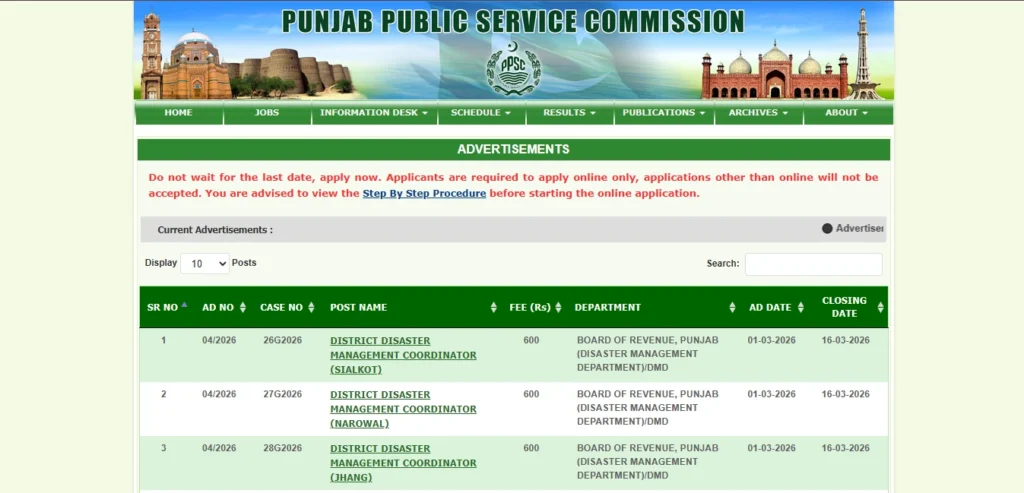
Lecturer recruitment is handled centrally by the Punjab Public Service Commission (PPSC) through competitive exams. Seats are announced for different subjects (English, Urdu, Islamiat, Computer Science, Commerce, etc.) and usually divided between male and female colleges. To compete effectively, you need to understand the eligibility rules, exam pattern, typical merit trends and how lecturer jobs fit into the wider PPSC system.
If you are completely new to PPSC, start with this foundation first:
PPSC Jobs in Punjab – Complete Guide to Departments, Scales & Selection Process
Department, Post and Basic Structure of Lecturer Jobs
PPSC lecturer jobs are recruited mainly for the Higher Education Department, Government of the Punjab, which manages public colleges across the province. The typical post title is “Lecturer (Subject)” in BS‑17. In most recruitment cycles, posts are announced separately for male and female lecturers, because male and female colleges are administered in distinct blocks.
These lecturer posts are usually permanent, pensionable civil service positions under the Punjab Civil Servants rules, not short‑term contractual teaching contracts. Lecturers can later progress to higher academic and administrative grades (Assistant Professor, Associate Professor, Principal) depending on departmental rules, service length, qualifications and performance.
Because these are regular PPSC govt jobs, they are advertised and processed only through the official portal www.ppsc.gop.pk. You should never rely on any other site to submit applications or pay exam fees. For a detailed comparison of PPSC govt jobs and other provincial routes, see:
PPSC Govt Jobs vs Other Punjab Government Jobs – Key Differences Explained
Basic Eligibility Criteria for PPSC Lecturer Jobs
Exact conditions are always given in the specific year’s advertisement, but some patterns are common across most lecturer recruitment cycles.
The qualification requirement is typically a Master’s degree or equivalent (at least 16 years of education) in the relevant subject from a recognized university. In many cases, at least second division is required; some adverts may specify additional preferences such as M.Phil or PhD, but these usually count more at interview stage than in basic eligibility. You must have your degree in hand (or final result notified) by the closing date mentioned in the ad.
The age limit is often around the mid‑twenties to mid‑thirties, with separate brackets for male and female candidates and standard government relaxations for different categories. However, these brackets have varied slightly over different lecturer recruitment cycles, so you must follow the current advertisement exactly rather than relying on past years’ rules.
Domicile is normally Punjab, with candidates from all districts eligible to apply for lecturer posts. There is usually no requirement for prior teaching experience at the time of entry; lecturer recruitment is largely open to fresh postgraduates, although any teaching or research experience you do have can help in the interview.
Because PPSC is strict about eligibility, you should always check the exact wording of the qualification and age clauses in the official lecturer advertisement for that year. To learn how to read those ads line by line and avoid missing hidden conditions, use this guide:
PPSC Jobs Advertisement – How to Read PPSC Jobs Ads & Avoid Costly Mistakes
Typical Syllabus and Exam Pattern for Lecturer Jobs
PPSC lecturer recruitment is heavily exam‑based. While PPSC can modify the pattern from time to time, the most common arrangement has been a single paper MCQ test of 100 marks, usually with a strong focus on the subject you are applying for, and a smaller portion on general knowledge and related areas.
The written paper generally has a duration of 90 minutes. For many lecturer subjects, PPSC has tended to follow a pattern similar to:
- A large portion of questions from the core subject (e.g., English Literature and Language for Lecturer English, Computer Science fundamentals for Lecturer CS).
- A smaller portion from general knowledge, Pakistan studies, current affairs, Islamic studies/ethics, basic mathematics, and IT.
Exact percentages and details are always given in the lecturer advertisement or a linked syllabus notice on PPSC’s website in that particular year. Sometimes PPSC issues subject‑wise detailed syllabi; other times it provides a broader outline.
Because the written test is the main filter, your preparation strategy should be built directly from the syllabus section of the current ad, supported by relevant textbooks, past papers and standard MCQ collections. Once you know your syllabus, the PPSC Job Planner becomes useful to track when the lecturer test is likely to be held so you can time your study plan effectively:
PPSC Upcoming Jobs & Job Planner – How to Track Future Advertisements
Written Test, Interview and Merit Calculation
The lecturer selection process typically has two major assessed stages: the written test and the interview conducted by PPSC. In some cycles, written marks carry a heavy weight in final merit, with interview scores adding a smaller but still important component. Academic record and experience, where counted, are usually factored in through set formulas defined by PPSC.
In broad terms, the steps are:
You apply online through the PPSC portal for your subject and gender category. After fee payment and form submission, you receive a roll number slip for the written test. Based on that 100‑mark paper, PPSC shortlists candidates according to merit for the available seats plus a margin. Shortlisted candidates are then called for interview, where a panel assesses subject knowledge depth, teaching aptitude, communication skills and general suitability for government service.
The final merit is prepared using a combination of written marks, interview marks and, where applicable, any additional components like academic or experience weightage, all according to the formula given in the rules or advertisement. PPSC then recommends candidates in order of merit for appointment against the vacant lecturer posts.
Because competition is intense, especially in high‑demand subjects and for postings in big cities, recommended candidates are often those who scored strongly in the written test. That is why your main energy should be invested in mastering the written syllabus, and then polishing your interview presentation.
To understand how this lecturer path fits inside PPSC’s overall exam and selection ecosystem, it is useful to read the general online application and jobs‑checking guides as well:
- PPSC Jobs Apply Online – Complete Step‑by‑Step Guide
- PPSC Latest Jobs Today – How to Check www.ppsc.gop.pk Jobs and Avoid Fake Ads
Lecturer Jobs vs Educators & ESE Jobs: What’s the Difference?
Many teaching aspirants are not sure whether to focus on lecturer jobs (college level) or educators/ESE jobs (school level). These are separate recruitment streams with different departments and job profiles.
Lecturer vs Educator vs ESE at a Glance
| Feature | Lecturer (PPSC) | Educator (School) / ESE (Common Pattern*) |
|---|---|---|
| Department | Higher Education Department (Colleges) | School Education / related departments |
| Recruiting Body | PPSC | Often PPSC or testing agencies / departmental |
| Basic Pay Scale (typical entry) | BS‑17 | BS‑14 to BS‑16 depending on category |
| Teaching Level | Intermediate & degree college students | Primary, elementary, high/senior school students |
| Nature of Post | Usually permanent civil service | Mix of contract and permanent depending on scheme |
| Main Focus | Subject‑specialist, higher academic content | Broader school curriculum and pedagogy |
| Competition Level | Very high, especially in popular subjects | Also high, varies by district and policy year |
*Exact grades and recruiting bodies for Educators/ESE have varied across policy cycles; always follow the specific advertisement.
If your interest is deeply academic and you prefer teaching older students in a college environment, lecturer jobs are likely the better fit. If you are drawn to school‑level teaching and may benefit from more geographically flexible postings, educators/ESE routes are worth exploring in parallel.
For a dedicated roadmap to educators and ESE‑style posts, see:
PPSC Educators & ESE Jobs Roadmap – From Application to Joining
(you can create this URL when you publish that article).
Lahore and Other Posting Considerations for Lecturers
Because Lahore hosts a large number of government colleges, many candidates hope for a Lahore posting through lecturer recruitment. However, lecturer advertisements typically state that candidates can be posted anywhere in Punjab according to department needs. You cannot demand a Lahore posting purely at the application stage.
That said, high‑merit candidates often have a better chance of securing postings in big cities like Lahore, especially when the Higher Education Department later seeks preferences or manages transfer lists. Therefore, if you are particularly interested in Lahore, your best strategy is simply to secure as high a score and merit position as possible.
To understand in detail how PPSC jobs link with Lahore postings, competition and rough cut‑off patterns, consult this focused guide:
PPSC Jobs in Lahore – Departments, Competition & Cut‑Off Trends
Using Year‑Wise Lecturer Cycles for Preparation (2020, 2021, 2022 & Beyond)
PPSC has held several large lecturer recruitment cycles in recent years, with different years remembered by candidates as “ppsc lecturer jobs 2020”, “ppsc lecturer jobs 2021” and “ppsc lecturer jobs 2022”. Although exact numbers and subject‑wise seats change every time, the broad pattern of eligibility and written tests has remained similar.
Even if you are preparing for a future cycle (2024 or later), it is very useful to study past lecturer advertisements and papers. Past ads show how PPSC frames qualification clauses and subject lists; past papers reveal the depth and style of questions.
A sensible approach is to:
- Visit www.ppsc.gop.pk, go to the archive or past advertisements/results sections and locate old lecturer adverts and syllabi.
- Download past lecturer papers or at least recall‑based MCQ collections from trusted sources.
- Use them to understand which sub‑topics are repeatedly tested in your subject.
Because older years may have used slightly different fee methods or formats, you should not copy their procedural details, but you can safely rely on them to recognise question patterns, favourite areas and difficulty level.
When you read any old screenshot or blog post referring to “www.ppsc.gop.pk lecturer jobs 2020” or similar, always remember that the only authentic record is what sits on the official PPSC portal. For a complete explanation of how to distinguish authentic PPSC material from misleading reposts, read:
Authentic PPSC Jobs Websites: Official Portal vs Other Job Sites
Step‑by‑Step: From Lecturer Advertisement to Appointment
The journey from seeing “lecturer jobs announced” on social media to actually joining as a lecturer in a government college involves several careful steps.
First, you must verify the news by opening www.ppsc.gop.pk and checking the Latest Jobs / Advertisements section. Once you find the official lecturer advertisement, read it word for word to confirm that your qualification, age and other conditions match. Use the techniques explained here to avoid missing any restrictions:
PPSC Jobs Advertisement – How to Read PPSC Jobs Ads & Avoid Costly Mistakes
Next, you pay the examination fee using the exact methods listed in that ad and submit your application through the Apply Online system on the PPSC portal. The full online procedure is covered here:
PPSC Jobs Apply Online – Complete Step‑by‑Step Guide
Then you note the expected exam window using the Job Planner and begin focused preparation on the lecturer syllabus for your subject:
PPSC Upcoming Jobs & Job Planner – How to Track Future Advertisements
After the written test, you check answer keys and results on the official site, prepare for the interview round and, if successful in final merit, wait for the Higher Education Department to issue appointment orders.
At each step, your success depends on a mix of careful reading of official material, disciplined preparation and avoiding shortcuts or unverified websites.
Final Thoughts: Building a Long‑Term Lecturer Career Through PPSC
PPSC lecturer jobs offer one of the most stable and respected academic career paths in Punjab’s public sector. They combine a subject‑focused teaching role with the security of permanent civil service, clear promotion avenues and the possibility of postings in major educational hubs like Lahore.
To make the most of these opportunities, you should treat lecturer recruitment not as a one‑time exam, but as part of a long‑term plan: keeping track of upcoming lecturer cycles via the Job Planner, strengthening your subject foundations over months, maintaining awareness of official advertisements and using reliable guidance resources only to supplement—not replace—what PPSC itself publishes.
If you combine that disciplined approach with smart use of authentic sites and a clear understanding of how lecturer posts fit into the larger PPSC jobs ecosystem, you will be in a strong position whenever the next “PPSC Lecturer Jobs” advertisement appears.
FAQs about PPSC Lecturer Jobs
What is the basic qualification required for PPSC lecturer jobs?
Most PPSC lecturer jobs require at least a Master’s degree or 16 years of education in the relevant subject from a recognized university, usually with at least second division. Some advertisements mention preferences for M.Phil or PhD, but basic eligibility is typically based on the master’s level qualification. Always follow the exact wording in the current advertisement published on www.ppsc.gop.pk.
To learn how to read these ads correctly and avoid hidden disqualifications, use:
PPSC Jobs Advertisement – How to Read PPSC Jobs Ads & Avoid Costly Mistakes
What is the age limit for PPSC lecturer jobs?
The age limit has varied slightly across different recruitment cycles and sometimes differs for male and female candidates. Generally, it lies somewhere in the mid‑20s to mid‑30s range with standard relaxations as per Punjab government rules. Because these brackets can change, you must always rely on the age clause written in the specific lecturer advertisement for that year, not on past memory or hearsay.
How is the written test for lecturer posts structured?
PPSC usually conducts a 100‑mark MCQ‑based written test, typically of 90 minutes, with a major portion from the relevant subject and a smaller portion from general knowledge and related areas. However, the exact breakup and any special instructions (such as negative marking) are provided in the advertisement or linked syllabus notification for that cycle. Structure your preparation directly around that official syllabus and use the Job Planner to time your study.
You can understand the planner here:
PPSC Upcoming Jobs & Job Planner – How to Track Future Advertisements
Are PPSC lecturer jobs permanent?
In most cycles, PPSC lecturer jobs are advertised as permanent posts in BS‑17 under the Higher Education Department, meaning they are regular civil service positions with pension and long‑term benefits. If any lecturer recruitment is conducted on a contractual basis, that fact is clearly stated in the advertisement. Always check the “nature of post” section in the ad on www.ppsc.gop.pk.
For a broader comparison with non‑PPSC and contract‑based government posts, see:
PPSC Govt Jobs vs Other Punjab Government Jobs – Key Differences Explained
Can I get a Lahore posting through lecturer recruitment?
Yes, it is possible, but not guaranteed. Lecturer advertisements typically allow posting anywhere in Punjab, including Lahore, where many government colleges are located. Departments decide postings based on vacancies and internal policies, often giving more choice to higher‑merit candidates. If Lahore is your priority, focus on achieving a strong written and final merit position.
For a detailed look at Lahore‑specific dynamics, use:
PPSC Jobs in Lahore – Departments, Competition & Cut‑Off Trends
How do I apply for PPSC lecturer jobs when they are announced?
You must apply only through the official PPSC portal at www.ppsc.gop.pk. The basic steps are to read the lecturer advertisement fully, pay the examination fee through the specified channels, log in to the “Apply Online” system, fill in your details accurately, and submit before the deadline. Later, you will download your roll number slip from the same portal and appear in the test at the assigned centre.
A detailed, practical explanation of the whole online process is here:
PPSC Jobs Apply Online – Complete Step‑by‑Step Guide
Where can I safely get updates about upcoming lecturer jobs?
The primary and only official source is www.ppsc.gop.pk, especially the “Latest Jobs / Advertisements” section and the Job Planner. You can also follow trusted guidance sites like JobLanePK for explanations and early alerts, but you must confirm every lecturer advertisement and date directly on the PPSC portal before you act.